Webinar on September 3
The Wealth Generation

Why Baby Boomers are your most underrated growth market
Every marketing budget seems to chase the young. Yet the generation with by far the greatest wealth and spending power is the one brands invest in least: the Baby Boomers. This blind spot is not a moral question, it is a growth question.
Tabea Höllger (strategist & brand expert) and Kees Elands (strategist & trend expert) bring a data-driven, generational lens to the boardroom. They show who Baby Boomers really are today, what values and cultural drivers shape their decisions, and why so many brands misread them. Understanding this generation turns an overlooked segment into a concrete, addressable growth market – with implications for portfolio, product, service and communication.
A fact-based, myth-busting session held in English, designed for CEOs and managing directors who decide where attention and budget go.
Key Learnings and Recording
The webinar has already taken place. Please request a recording.
3 Takeaways from the Webinar:
1. Baby Boomers are the most underrated growth market – budget allocation contradicts the facts
People over 60 make up 26% of the world's population, control 28% of global spending power, and their spending power in the EU alone will grow past €5 trillion by 2030. Against that stands just 3% of digital media budgets and 4% of advertising representation. Companies concentrating marketing budgets primarily on younger audiences are knowingly forgoing the largest, most liquid customer pool in the market. It's a misallocation of resources that deserves board-level attention and quantification.
2. This generation has redefined itself – communication and product development often haven't
Baby Boomers are living a "Third Age": a life stage shaped by health, time and resources, defined by reinvention rather than decline, visible in travel behavior, entrepreneurship ("seniorpreneurship"), and technology adoption. Brands that continue to address this group through deficit and dependency narratives lose relevance and purchase intent. Strategic implication: align portfolio, product development and advertising around possibility rather than age without diluting brand identity (e.g. differentiated product lines rather than repositioning the core brand).
3. This audience is missing where decisions about them are made – with direct consequences for decision processes
Boomers take pride in their life achievements, disproportionately hold the actual purchasing power (including in B2B, e.g. on the budget-holder side), and research more thoroughly than younger generations. Their loyalty is a result of quality, not inertia. At the same time, they're absent from teams, product development, customer panels, and personas that are often built once and never updated. Recommendation: anchor ownership of this segment organizationally (clear accountability, advisory board inclusion, revisiting panel age caps) rather than treating it as a byproduct of diverse teams.

Tabea Höllger, Partner
Tabea Höllger ist Expertin für Markenpositionierung in gesättigten Märkten, besonders im FMCG-Bereich, und widmet sich Themen wie Produkteinführungen und Verpackungswirkung. Als Vermittlerin zwischen FMCG-Markt, nachhaltiger Markenführung und Technologie begeistert sie Unternehmen. Sie ist zudem Leiterin des Markenstrategie-Seminars.
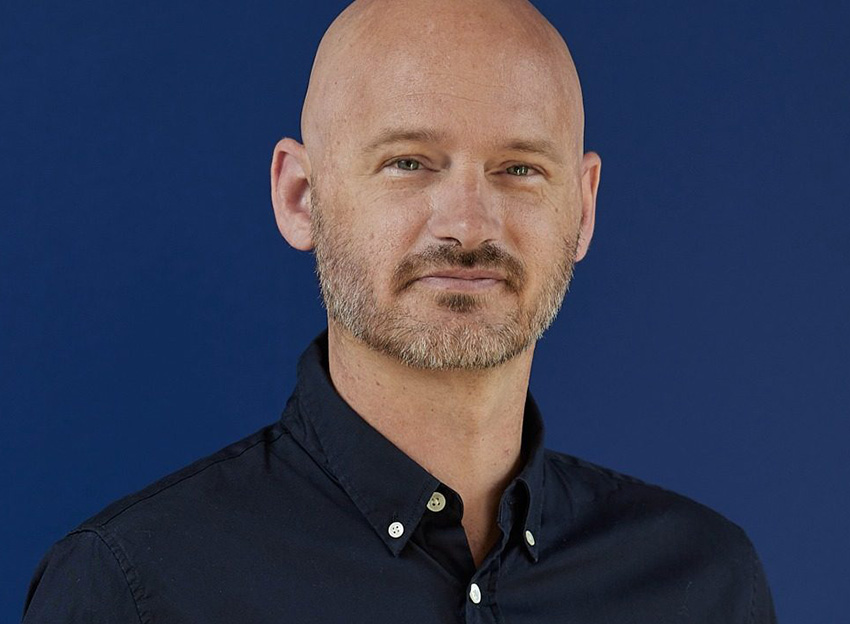
Kees Elands, Trend Expert
Kees his purpose is to help ambitious leaders and brands to human-proof their business. In 2003 he founded TrendsActive, a trend consultancy enabling brands to become more human centric. Next to being the founder of TrendsActive, he is also initiator of the first academic trend master for executives at the University of Utrecht and is initiator of various trend studies and white papers on subjects like trust, meaning, visual culture & generations.
Your contact person

Eva Stockhausen
Senior Marketing Manager
Call:
+49 911 9335744
E-Mail:
eva.stockhausen@brand-trust.de