
Publications
Article
1. Dezember 2025
 Reading time: approx. 7:20 min.


Strong communities: What brands can learn from sports clubs
- Brand traditions are not old-fashioned; on the contrary, they are the foundation of a community and make it strong.
- Digital follows real life: building a fan base requires more than campaigns and user-generated content. Real encounters are essential.
- The magic of attraction lies in the interplay between routine and surprises.
Did you know? More than half of all Britons are fans of a football club (Statista). These clubs must have something about them that attracts people – and keeps them coming back. How do sports clubs manage to build such strong communities? Regardless of whether they win or lose their games? As a sports economist, this phenomenon has always fascinated me.
It's not about the size of the club, expensive transfers or big names. It's something deeper. Second division club FC St. Pauli, for example, leaves many first division clubs far behind in terms of community strength. It impressively demonstrates that attitude, values and identity are more important than championship trophies.
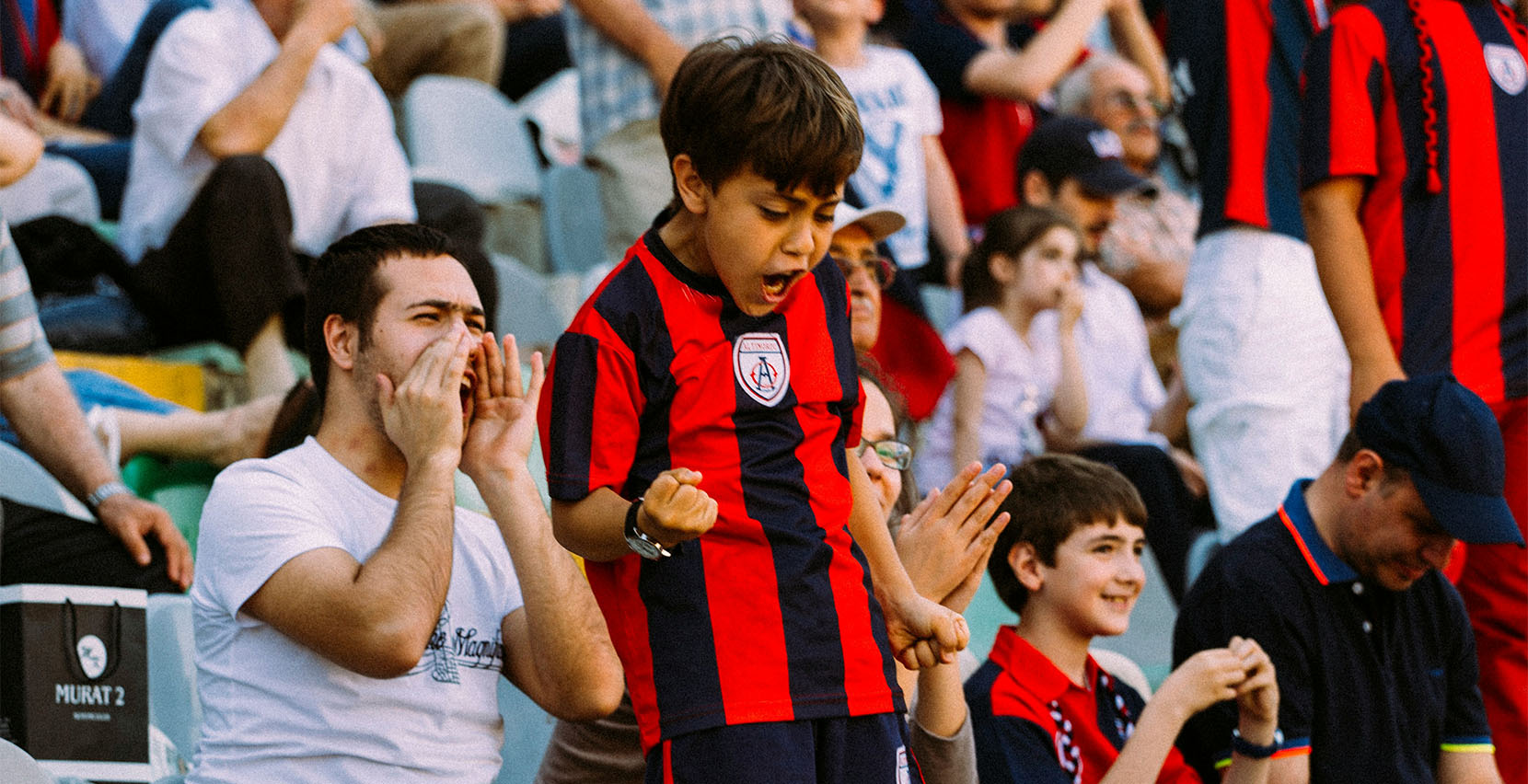
Sports clubs show what happens when people are allowed to get excited and get involved. When they feel they belong, that they are part of something. Such brands appeal to emotions and make hearts beat faster. It is as if they have understood human nature.
I am convinced that brands in other industries can learn a lot from them. Because it is also time for them to think more humanely in community management, not just data-driven. Sports clubs are showing them how it's done.
What are the benefits of a community?
A brand community is not just 'nice to have'; on the contrary, it is the foundation for growth because fans are better customers. They are loyal and remain so even when things get tough. They forgive mistakes and invest their heart and soul and money. A strong community is therefore more than just a nice social phenomenon: it makes a brand stable and valuable – and is therefore a sales driver.
But I'll be honest: the word 'community' has lost its lustre. It feels like everyone is using it now, but hardly anyone is using it in the right context. Too often, user-generated content is seen as a panacea, embedded in content marketing campaigns that are pretty to look at but remain soulless. That's not enough to build a fan base. It's not about constant bombardment on social media, but about genuine connection.
I have identified ten characteristics of sports club brands that contribute to their lasting success. I'll use a few football clubs as examples. Perhaps you'll find some inspiration to take your own community to the next level?
1. Sports clubs show where they come from
Sports clubs understand that looking back is not a step backwards. They have cultivated their deeply rooted values since their foundation, which makes them unique. These values are more than just words on paper: they are believed in, lived by, and provide direction and stability. They help clubs make decisions that make sense – for the club and for its fans.
FC St. Pauli is the best example: since its founding in 1910, it has stood for tolerance, inclusion and social responsibility. This attitude shapes everything – from partnerships and sponsors to campaigns.
Other brands can learn from this: what has always defined your brand is important. It makes it credible, sustainable and authentic. Does that sound old-fashioned to you, like stagnation? Quite the contrary. The key lies in rethinking these values and traditions: with a modern perspective and a fresh twist. Reflect on what has always touched the hearts of your customers – and retell it in a new way.
2. Sports clubs are a safe haven for their community.
These deeply rooted, lived values mean that, over time, sports clubs become a home for their fans, a safe haven. They satisfy the need for stability and orientation – especially in times of constant change. Together, fans look back on old games, legendary moments and famous personalities.
Traditions and rituals shape the community: fan chants, regular meeting places before the game, or small gestures in the stadium. They are more than just habits – they are part of history. They are passed down from generation to generation, trusted like a family recipe.
I know this from my own experience: the FC Bayern fan scarf was already in my pram, I experienced my first stadium visits in a child seat and my first favourite song was 'Stern des Südens' (Star of the South). All of this was simply passed on to me, as a matter of course. Anyone who had their feet under the table at our house was a Bayern fan – come what may.
Other brands can learn from this: brands should be proud of their tradition and invest in it. Take a look back: which of your rituals, products or messages give your customers a sense of security? What would they never want to do without? It is precisely these elements that make your brand a comfortable home.
3. Sports clubs give life routine
Sports clubs offer something that has become rare: routine. The match schedule, the sports show, the shared ritual at the weekend. When the whistle blows at 3:30 p.m. on Saturday, it's more than just the Bundesliga for the fans. It's everyday life. The same beer, at the same time, in the same place. A ritual that provides reliability and security amid the unpredictability of the outside world.
The steadily growing number of season tickets shows how strong this bond is: Borussia Dortmund, for example, has around 55,000 season tickets for the 25/26 season – the most in Germany. For these people, the Saturday game is not just an appointment, but a fixed point in their lives.
The Ajax Amsterdam community shows how a routine can become an integral part of life: its website shows what the 'real' Ajax experience is all about. Before every big game, they unfurl a huge flag with the emblem above their heads, and when Ajax scores, 'We Will Rock You' plays.
Other brands can learn from this: routines are more than just repetitions. They are emotional anchors. Find out which of your services are recurring. What could customers incorporate into their everyday lives? Turn it into a ritual that people look forward to – and miss when it is suddenly gone.
4. Sports clubs bring life through rhythm
Sports clubs are masters at creating excitement, whether in football, handball or basketball. The rhythm of the national leagues, European leagues and international matches creates a pulse of highlights, breaks and new beginnings. When the season ends, it leaves a gap in the everyday lives of fans. Suddenly, they are missing something: the ritual, the routine, the highlight of the weekend.
However, it is precisely this break that makes a club desirable, time and time again. No kick-off, no cheering for weeks – during this time, anticipation grows immeasurably. Isn't anticipation the most beautiful form of passion? Sports clubs know that those who make themselves scarce remain desirable.
Other brands can learn from this: consciously play with tension and rhythm. Dare to disappear on purpose to increase the value of your brand. Cleverly staged, withdrawal can increase desire. But it's important to remember that if you withdraw, you must announce the next highlight. This maintains the connection and increases anticipation. Brands that succeed in doing this are chosen again and again – not out of habit, but out of genuine anticipation.
5. Sports clubs always have surprises in store.
What makes sports clubs so unique is how they deal with the unpredictable. Even when everything seems familiar – the same opponent, the same match day, the same rituals – every kick-off could be the start of a story that no one expects. Top first division teams fail in the cup against third division teams. A seemingly certain 0:5 defeat is turned around in extra time.
No one knows what will happen. This keeps the relationship between the club and its fans alive; there is no standstill. Every game is unique and a little emotional adventure at the same time. Remember the 2014 World Cup match between Germany and Brazil – that 7:1 victory that no one saw coming? A collective goose bump moment that made history.
Other brands can learn from this: Of course, change is not an effective method of retaining people; reliability remains the basis. Nevertheless, a well-placed surprise provides fresh energy. Brands can change their game plan and surprise their customers – in a positive way, of course.
How about surprising your customers with an unexpected action in moments of frustration? Especially in negative situations, such as process delays, this can be inspiring. Nothing builds loyalty more than the feeling of 'Wow, I didn't expect that – that's terrific.'
6. Sports clubs welcome everyone
In a sports club, it doesn't matter who you are, how much you earn or where you come from. What matters is that you share the same values. In the community, belonging is not determined by status, but by attitude. Anyone who is willing to live by these values is welcome. External rivalry brings people together internally, turning many individuals into a single entity.
FC St. Pauli shows how powerful such a distinction can be: anyone who does not take a clear stand against discrimination, racism and fascism does not belong. Period. This community sets its boundaries here and skilfully puts them on display.
Other brands can learn from this: only those who show attitude attract people in the long term. Setting boundaries is therefore not a risk, but an act of clarity. Those who know what they stand for also know what they stand against. Brands that courageously live this create a genuine identity. They automatically become desirable for those who want to belong and uninteresting for those who don't fit in. This creates a community that connects rather than excludes. Dare to be controversial and defend your brand's boundaries with pride.
7. Sports clubs create exclusivity
Being part of a sports club community means experiencing moments that outsiders can only imagine: seeing the players up close from the fan block, experiencing shared ecstasy in a perfectly coordinated choreography, feeling at one with thousands of others. Sports club communities create exclusivity. Not through exclusion, but through belonging.
This feeling of 'only we are allowed to do this' brings people together. It instils pride because it shows: I belong. At the same time, it awakens a longing in those who do not belong. Because what you cannot have suddenly becomes desirable.
This is precisely where the magic of these communities lies. An impressive example of this are the legendary peñas of Real Madrid communities, spread all over the world. When they come together in the stadium in Madrid, they dominate the fan curve. They are allowed to meet players or watch training sessions. They also celebrate their unity in their home countries: with parties in pubs or public viewing in cinemas. These are experiences that remain hidden from outsiders – and increase the desire to belong.
Other brands can learn from this: exclusivity creates desirability. Brands should give their communities special brand experiences that only insiders can enjoy. And they should have the courage to show this exclusivity to the outside world. Those who don't belong should feel that they are missing out on something. This creates pride internally and attraction externally. I think this is a powerful form of brand loyalty.
8. Sports clubs turn a community into a movement
When a club stands for something beyond sport with its values, a connection is created that is more powerful than any goal. Fans then join not only because of the sporting performance, but because they want to be part of something bigger. They don't just cheer together – they create together. They don't just fight for points, but for a common goal. This is how a fan community becomes a movement.
FC St. Pauli shows how this can look: together with the community, it founded the fan shop. A place where prevention work with young football fans takes place and which also serves as a meeting place for exchange and cohesion. This is a project that goes far beyond sport and enables fans to live the values of their club with commitment.
Other brands can learn from this: a strong community longs to make a difference through its participation. They want to show what they stand for. Ask yourself: what footprint does your brand want to leave behind, beyond its core performance? What gives your community a purpose worth standing up for? To do this, reduce your message to the essentials: to the what for.
9. Sports clubs let fans help shape the club
When fans are allowed to not only watch, but also have a say – in campaigns, projects or club decisions – they feel like they are part of the whole. 'Those up there' becomes 'us here together'. Being involved gives them responsibility, and responsibility awakens passion.
Those who feel they belong give more: more time, more passion, more pride. Manchester City shows how this works: fans are allowed to design the third jersey for the 2026/27 season. Suggestions are submitted and voted on. The team will then wear a design that comes from the community. Rival Manchester United is also taking a stand: with its 'Fan Engagement Plans', the club is committing itself to taking its fans' interests seriously, listening to them, involving them and giving them real co-determination rights.
Other brands can learn from this: genuine loyalty is not created by constant bombardment, but through joint action. Give your community the opportunity to become co-creators. Ask questions, listen, let your fans get involved. Because those who are involved in a solution not only support it in the end – they are committed to it.
10. Sports clubs promote real encounters
In a world full of streams, likes and second screens, sports clubs show that goosebump moments don't happen online, but where people come together in real life. When you stand shoulder to shoulder in the stadium and your heart skips a beat before the ball crosses the line. When you shout with friends in front of the television as if you were on the pitch yourself. No algorithm can recreate these moments.
Of course, it's convenient to watch the game on your smartphone on the bus or train. But let's remember the ghost games during the pandemic: empty stands, no voices, no soul. When the stadiums finally reopened, it was immediately clear: no stream, no tool can replace that feeling of being part of something bigger. Communities are not created by scrolling, but by experiencing.
Other brands can learn from this: open up your digital spaces – and encourage real-life encounters. Get out there. Meet your fans face to face. Find the one thing about your brand that cannot be digitised – and make it tangible offline. This 'new proximity' brings energy and breathes new life into your brand.
You don't win fans through appealing overload, but by making room for a strong, loyal community. Freshen up your community management with new ideas! It's worth it – after all, your fan base is the foundation for your long-term success. It's time for next-level community management!
Lessons for your brand
Would you like to know how you can apply these lessons to your brand and community management? Then please feel free to contact us (growth@brand-trust.de or +49 911 9335780) or write directly to the author Luisa Beinrucker.
Author

Luisa Beinrucker
Associate Consultant

Best of Consulting 2025 – 1st place for BrandTrust
We are among the best consulting firms in Germany: We have been honored by WirtschaftsWoche with the "Best of Consulting Mittelstand 2025" award – taking first place in the Marketing category. We were particularly convincing in the areas of client satisfaction and effectiveness of results.
We are delighted to receive this award and would like to thank our clients and partners for their trust, as well as our fantastic team.
Get in touch with us
Would you like to arrange a non-binding telephone call with us or do you have questions about our offer? Then simply fill out this form and we will get in touch with you as soon as possible.